
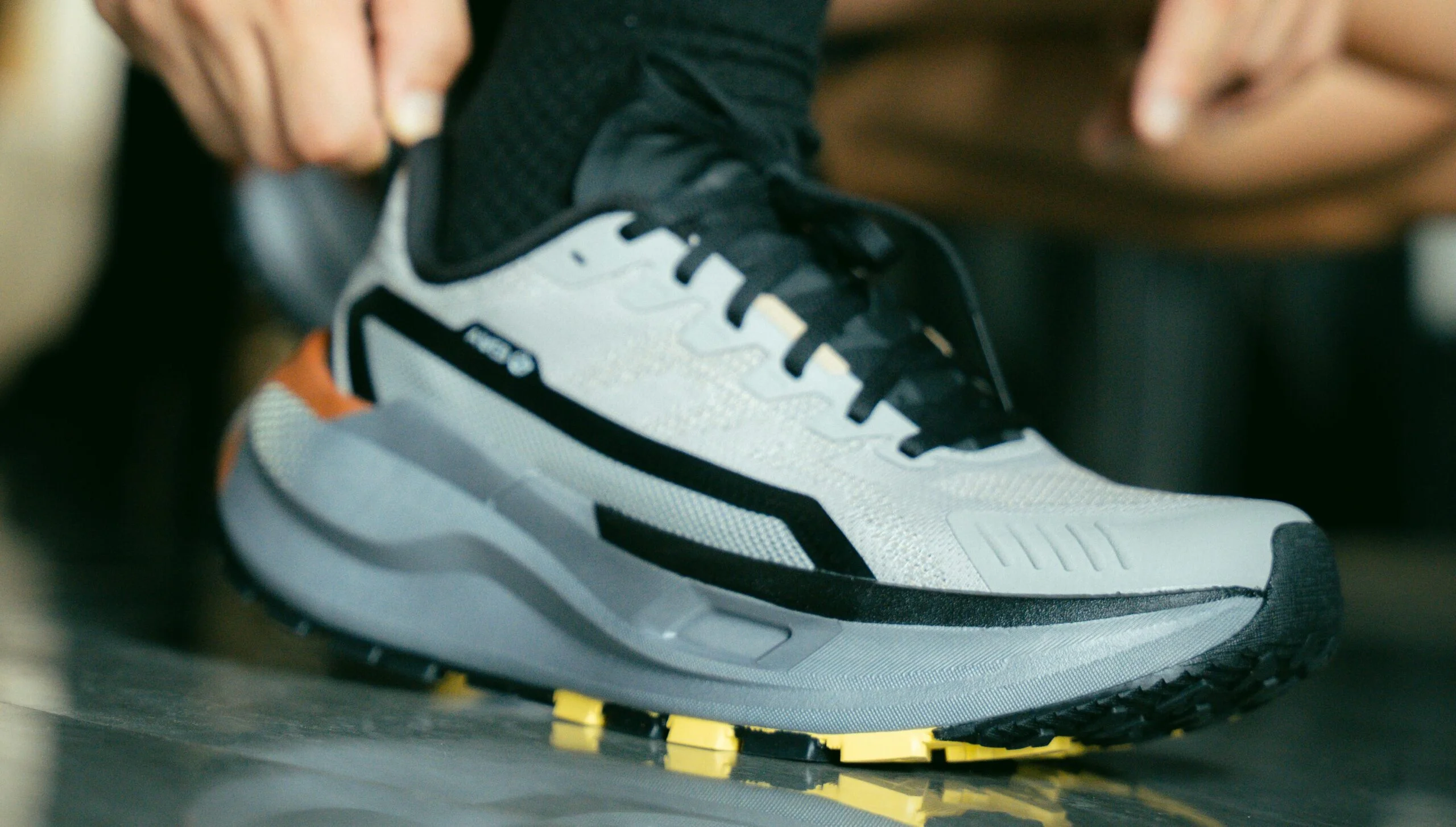
These are a must have in the world of elite marathon running, but how much faster are carbon plate running shoes in a triathlon? In the year 2026, if we are not using carbon plates running shoes, we are lead to believe that we are leaving performance on the table.
Looking at the data from elite male marathon runners, times were 2% faster (2 minutes 48 seconds) on average. Elite female runners were 2.6% faster, (4 minutes 18 seconds).
This seems like a total no brainer. No matter your morals or feelings about carbon plated running shoes, it’s clear that you need them to be competitive at this level.
But what about amateur runners like you and I? The studies on amateur athletes are a lot less conclusive. The slowest speeds they were tested at with amateur runners was 14KPH. That’s just over a 20 minute pace for the 5K. I can hold that pace, but not for much more than an hour.
What does seem clear from the data available is that the gains from carbon plated shoes seem to evaporate as the subject runs slower, and the events get shorter. The carbon plated shoes provide something of a spring effect, but the less compression a spring has, the less energy it produces. If you are running 5K around the 30 minute mark, it may be these shoes actually slow you down.
Carbon plated running shoes in triathlon
A triathlon run is quite different to a marathon. Where large marathons will have a lot of leverage to close main roads for their event, triathlons don’t have that same luxury.
As a result, most run courses are multi-lap with much sharper turns than you would find in a road marathon, as the course winds its way around smaller roads.
Carbon plated running shoes are fantastic at running in a straight line. Going round corners? Not so much. The stack height of these shoes makes them very unstable. If you lose time to others runners every time you go round a corner, will you actually put in a faster run split?
These shoes also tend to take longer to put on. Over a longer distance race you will make that time up, but over a shorter race? The difference might be negligible.
If we are looking at middle or long distance triathlons, this is where carbon shoes really come into their own. However, running nonstop over these distances after swimming and cycling is not easy.
Every year, hundreds of athletes in expensive carbon plated rubbing shoes walk their way to a 5+ hour marathon time. They read the marketing about 4% improvements to running speed, throw money at these super expensive shoes, and still ended up having to walk most of the way round the marathon.
Their bike fitness wasn’t sufficient, their pacing was off, they had a poor nutrition plan, and everything came crumbling down around them. A pair of rollerskates probably wouldn’t save you in that scenario.
Injury risk
It’s very difficult to quantify injury in any kind of study, but many runners anecdotally report higher instances of injury when switching to carbon plated shoes.
Due to the design of the shoe, it changes how athletes run. Not by a huge amount, but it doesn’t take much at all to cause an injury.
If you decide to try carbon plated shoes, you will want to increase the mileage you do in them very slowly to reduce the risk of injury. There is also the risk of rolling your ankle and causing serious damage on tight, twisty courses as well.
Conclusion
If you are a very fast experienced Ironman athlete who is close to their potential and vying for podium positions, then carbon plated running shoes are a no brainer in my eyes. They could shave a couple of minutes off of an IRONMAN marathon.
If however you are taking on short races, are new to longer distance events, injury prone or simply on a tight budget, I would steer you away from them. The risk/reward ratio just doesn’t add up for me. It will save you hundreds that could be better spent on coaching, a training camp or more race entries.