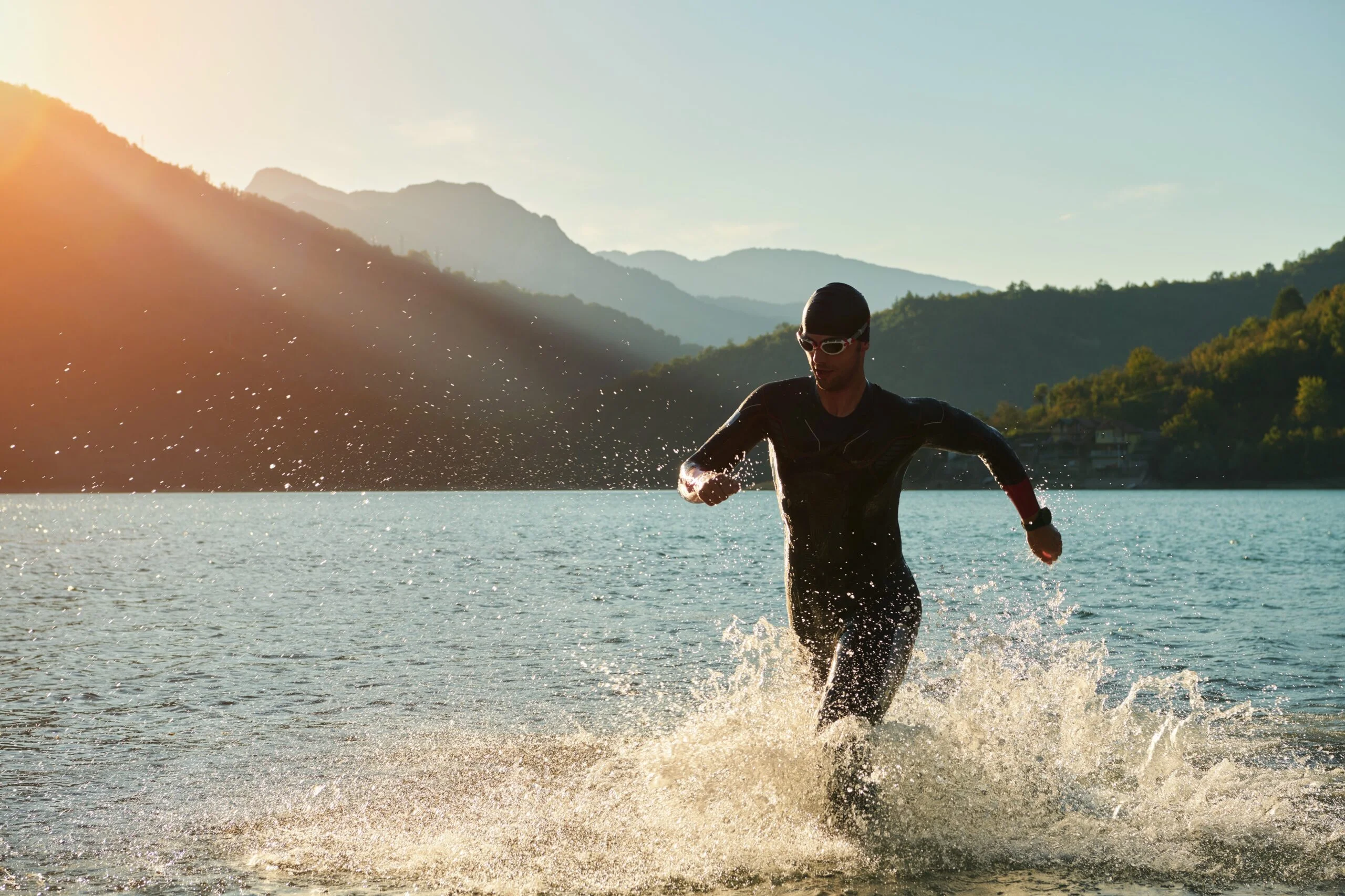

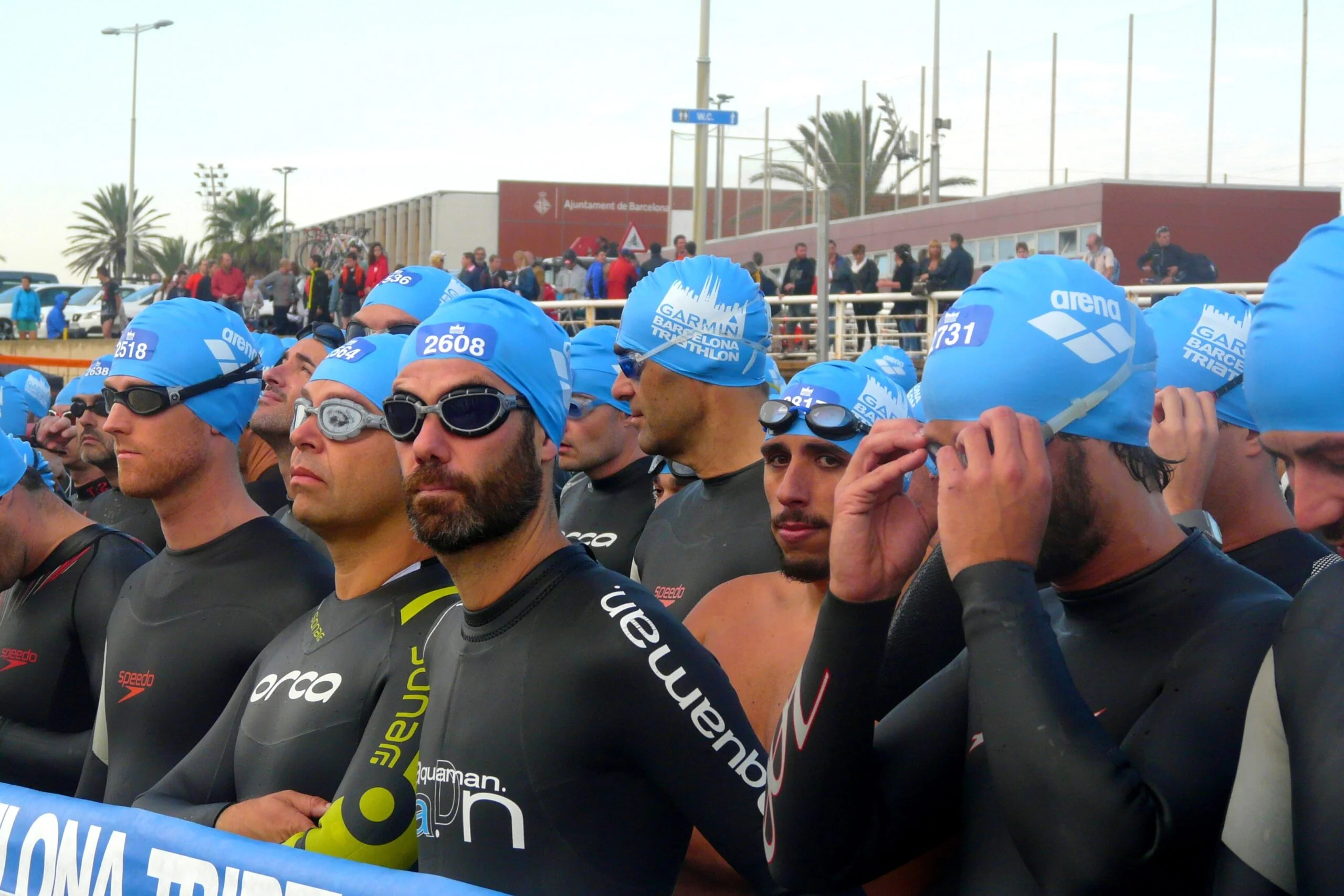
Deciding to enter an IRONMAN is one thing, understanding how to train for an IRONMAN in a year is another matter entirely. You have a steep learning curve ahead of you, with three sports to master win only a year.
My personal recommendation would be to train for a 70.3 distance in your first year, so you have less pressure and can enjoy the journey a bit more. You’ll be much faster, and less likely to pick up an injury.
But I know that for some the call of the full Ironman is just too strong, and they want to go all in. So here are my top tips on how to train for an IRONMAN in a year.
Prioritise Volume
When preparing for an Ironman, you need to put in a LOT of training, this isn’t just a fitness challenge, this is a change of lifestyle. You will be dedicating a large proportion of your free time to swimming, cycling, running, strength training, eating well and planning training.
Most IRONMAN athletes will train for 12-15 hours a week in the final months leading up to our race. We need to increase the volume, but do so gently. If we jump straight from doing very little to 10 hour training weeks, we are almost guaranteed to get injured, or burn out ahead of race day. We need to fit in a LOT of training over the next year, but in a careful, structured fashion.
It’s not good just heading out for what you feel like doing on the day. Going for a swim when it’s raining, and riding your bike only when the sun’s out. This may be enough to help someone get round their first sprint triathlon, but when training for an IRONMAN in a year, we need a focused approach. There is very little room for error.
Get the right kit for the job
Triathletes need a lot of equipment. From your bike to your wetsuit, sports nutrition to clothing and shoes to swim toys, we have a huge shopping list.
Getting just one of these wrong can be disastrous. A bike that’s too big, shoes that pinch, a wetsuit that is too small or gels which upset your stomach will all derail your performance.
You need to get the right kit, and you need to get it fast. We can’t afford to miss training sessions due to a lack of equipment.
As a general rule, I recommend against simply following the recommendations of others. Especially influencers who get a kickback from recommending certain products. Instead you want to talk to an expert to help you find the right product for you. Although a bit of trial and error will always be involved.
Lose the ego
Some of you will be targeting an IRONMAN finish for the kudos that comes with the medal, as well as those finish line pictures. There will definitely be an element of wanting to impress others, and you will likely be utterly convinced in your ability to complete this challenge.
This is probably the number one reason for people failing to complete their IRONMAN. They have it in their head that if they just push through, work hard and never give up, that they will complete their goals. The tagline of “90% mental” that gets thrown around byIRONMAN themselves doesn’t help this.
If you want to complete an IRONMAN, you need to lose the ego. Or the race course will humble you.
You need to assume nothing, learn the why behind the training, and be realistic with your goals. Don’t be afraid to ask for help either. If you see yourself as being a one man/woman crusade to complete this goal solo then you are much more likely to end up failing to finish.
Train Easy
An IRONMAN is a test of endurance, not of speed. If you want a sport that will regularly push you to your limit, then IRONMAN is not for you.
Yes, there will be some brutally tough sessions, but probably only one a week. The rest of our sessions will be easy, because we will be racing easy.
In years gone by, pundits would interview IRONMAN athletes while they were cycling, and they would give full, clear replies. They were not sweating profusely, unable to talk as they pushed their body to their limits, they were cycling at a low intensity.
While most professional athletes are probably capable of coming close to two hours in the marathon, the fastest IRONMAN marathons at the time of writing are held by Manoel Messias Dos Santos with a 2:26:50 at IRONMAN Brazil in 2025, and Laura Phillip with a 2:38:27 at IRONMAN Hamburg, also in 2025. These athletes are working at well below their max on race day.
In fact, many of the fastest athletes only perform 10% of their training at a high intensity, the rest is just easy, steady training. We need to train like athletes, not heartbroken teenagers with something to prove.
Acknowledge the scale of the challenge
Many will sign up to an IRONMAN out of the blue as part of a bet, or after a few drinks. The morning after, the reality of what they have signed up starts to dawn on them.
At this point, many will bury their head in the sand at this point, telling themselves it will be alright on the night. Others will be paralysed with fear, and be unable to come to terms with what’s required. Up to 30% of athletes who sign up to an IRONMAN never make it to the start line.
We need a measured, structured approach to complete this monumental challenge. If you’re serious about taking on this challenge, I have a free webinar and ebook to help you prepare for this challenge, as well as the option of a free 15 minute chat with me. Sign up for free here.
If you’re still on the fence, have a look at my top 10 reasons to do an IRONMAN, and 10 reasons you may not want to.